
Mr Jafri is a pleasure to do business with. His workers have cleaned and repaired several of my rugs. The quality of work was excellent, and it was completely in a timely manner.
Oriental Area Rug Cleaning and Antique Rug Restoration and Repair in Rhinebeck, New York
We serve customers in Rhinecliff, Bangall, Fishkill, Merritt Park, Hyde Park, Pleasant Valley, Red Oaks Mill, MacDonnell Heights, Pawing, Staatsburg & Gretna
For 42 years, Jafri Oriental Rugs has been recognized as the provider of the best and most comprehensive area rug cleaning & protection services in Rhinebeck and throughout New York, Massachusetts, Vermont & Connecticut& areas that we serve. Our IICRC-certified technicians use cutting-edge technology, time-tested cleaning methods, pet-safe cleaning products, and eco-friendly protection processes for your Oriental rugs and other fine textiles.
20% Sale on Rug Cleaning and Repair
All pricing estimates include the 20% discount automatically
Among the primary services we provide for customers in Rhinebeck include:
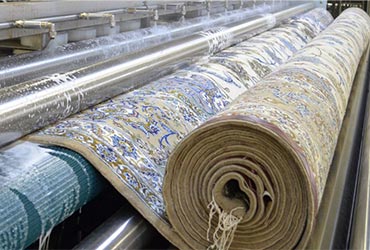
Rug Cleaning
Our crews clean all types of area rugs, removing tough stains from fine word rug.
Rug Cleaning Process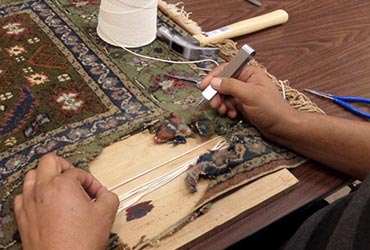
Rug Repair
We perform fringe repair, color correction, binding repair & rug restoration services.
About Rug Repair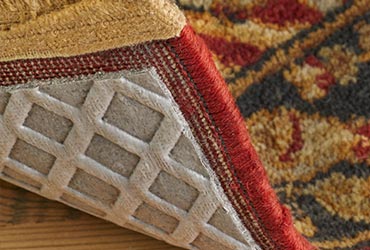
Rug Pads
We offer custom-sized rug pads to enhance and protect your heirloom & antique rugs.
About Rug Pads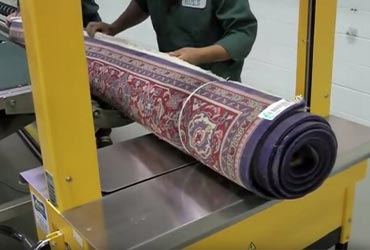
Free Pick-up & Delivery
For cleaning, repair, and other services, we pick up and return your rug at no charge.
Contact UsFrom cleaning & maintenance to protection & storage, we can handle all aspects of your rug-related needs in the Greater Albany area. Your fine textiles will be safe, secure, clean, and protected from all perils while in the hands of our IICRC-certified specialists. We treat each rug with the individual care and custom cleaning and protection services required for each type of rug fiber:& wool, cotton, jute, silk, sisal, polyester, nylon, acrylic, and more. When you need our help, give us a call at 518-201-1191 today!
Types of Rugs We Clean in Rhinebeck
We clean a wide variety of rugs for customers in Rhinebeck.
The list includes:
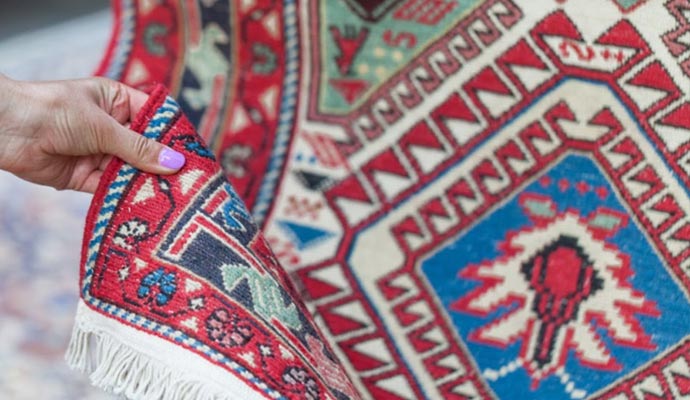
Our Rug Cleaning Process in Rhinebeck
When it is time to clean your Oriental or area rug in Rhinebeck, our step-by-step process includes:
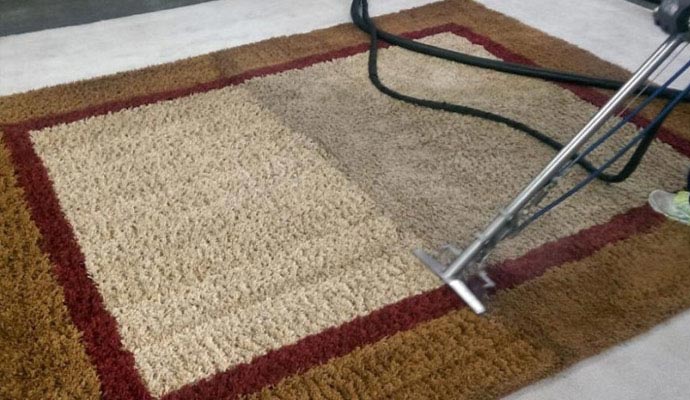
-
Consultation: We meet with you to inspect your rug and determine the best possible eco-friendly cleaning method.
-
Dusting: Because rugs are designed to hide dirt, we remove deep-seated dust and dirt with our unique dusting approach.
-
Preconditioning Treatment: We customize a special treatment for each rug to assure the safest, most eco-friendly cleaning options are used.
-
Spot & Fringe Prep: We identify and treat visible spots & stains while preparing the rug fringe for treatment.
-
Shampoo: Using an ideal rug shampooing treatment designed for your rug, we clean thoroughly while maintaining the integrity of delicate fibers.
-
Rinse: We remove all excess dirt and soap from the rug carefully and safely.
Once the rug is dry, it is returned to the customer.
Trust Us to Clean & Protect Your Oriental Rug in Rhinebeck, NY
To get the best available rug cleaning, rug maintenance, rug protection, and rug storage services for customers in Rhinebeck and throughout Upstate New York, you need to contact the proven professionals from Jafri Oriental Rugs. For the past four decades, we have handled all aspects of your rug-related needs when it comes to cleaning, repairing and restoring fine textiles in Rhinebeck. To learn more about our services, give us a call at 518-201-1191 or click here to make an appointment today!
Our customers love us!
See All 46 Reviews
Customer Reviews from Rhinebeck and Surrounding Areas
( 5
from 12 reviews )
Completed Jobs from Rhinebeck and Surrounding Areas
See All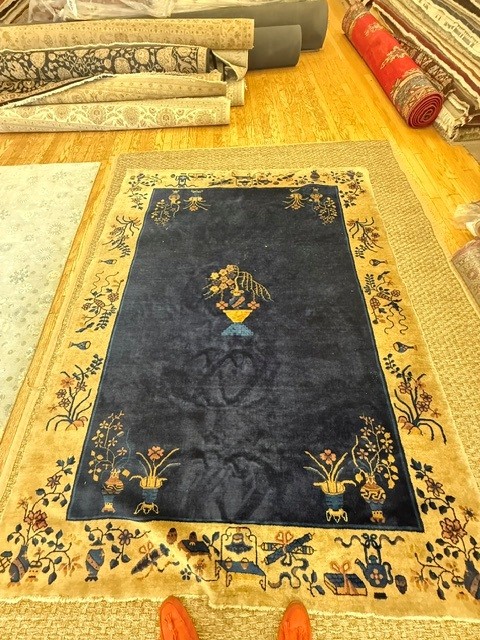
September 10, 2026 | Rhinebeck, NY
1. Inspection
The rug is examined for its construction, fibers, dyes, age, existing repairs, stains, and structural condition.
2. Dust and Soil Removal
Loose and embedded dry soil is removed before the washing stage. This helps prepare the rug for deeper cleaning.
3. Specialized Cleaning
Cleaning methods are selected according to the individual rug. Antique and delicate rugs require particular care to help protect their fibers, colors, and construction.
4. Rinsing
The rug is carefully rinsed to remove loosened soil and cleaning residue.
5. Controlled Drying
After cleaning, the rug is dried under controlled conditions to help maintain its shape and condition.
6. Final Inspection
The rug receives a final inspection after cleaning. Areas requiring additional attention can be evaluated before the rug is returned.
Why Choose Jafri Rugs for Ming Dynasty Rug Cleaning?
Jafri Rugs has decades of experience providing professional rug cleaning, repair, and restoration services. Our expertise includes handmade, Oriental, Persian, antique, and specialty rugs.
Rather than treating every rug the same way, professional rug care considers the individual characteristics of each piece. This is particularly important when working with older Chinese and Ming Dynasty rugs.
Whether your rug needs routine cleaning, stain removal, structural repair, fringe restoration, or more extensive reweaving, Jafri Rugs can evaluate its condition and recommend an appropriate approach.
Preserve Your Ming Dynasty Rug
Antique rugs are more than decorative pieces. Their craftsmanship, materials, and age make proper care important for maintaining their appearance and condition.
Regular professional cleaning can help remove accumulated soil, while timely repairs can help address damage before it becomes more extensive.
If you own a Ming Dynasty rug, Chinese antique rug, or other Oriental rug that needs professional cleaning or restoration, Jafri Rugs can provide specialized rug-care services.
Professional Ming Dynasty Rug Cleaning Near You
For professional Ming Dynasty rug cleaning, Chinese antique rug cleaning, Oriental rug cleaning, and antique rug restoration, contact Jafri Rugs to have your rug evaluated.
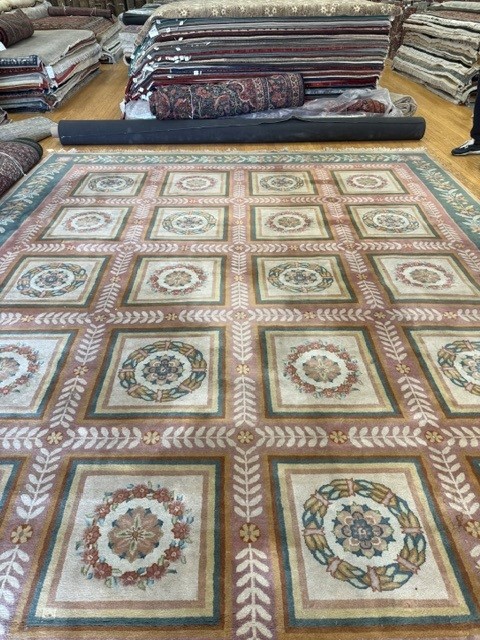
August 13, 2026 | Rhinebeck, NY
1. Detailed Inspection
The rug is examined for stains, discoloration, loose threads, worn areas, foundation damage, fringe deterioration, and color stability.
2. Dust & Soil Removal
Embedded dust, dirt, and abrasive particles are carefully removed before washing to help protect the rug's delicate fibers.
3. Specialized Cleaning
The appropriate cleaning method is selected based on the construction and materials of the Aubusson rug. Special care is taken with delicate fibers and potentially unstable dyes.
4. Stain & Odor Treatment
Individual stains, pet contamination, and odors can receive targeted treatment designed to minimize damage to the original colors and fibers.
5. Controlled Drying
After cleaning, the rug is carefully dried under controlled conditions to help reduce the risk of shrinkage, dye migration, mildew, and distortion.
6. Repair & Restoration
If damage is discovered, Jafri Rugs can provide additional restoration services such as reweaving, fringe repair, edge repair, foundation repair, and other structural restoration when appropriate.
7. Final Inspection
The rug receives a final inspection to ensure it has been properly cleaned, dried, groomed, and prepared for return.
Why Choose Jafri Rugs for Aubusson Rug Cleaning?
Aubusson rugs can be particularly sensitive to improper cleaning. Working with a rug specialist who understands antique and handmade textiles can help preserve the rug's original character and craftsmanship.
Jafri Rugs provides comprehensive care for Aubusson, Persian, Oriental, antique, wool, silk, and other fine handmade rugs, from professional cleaning to complex restoration.
If your Aubusson rug is stained, soiled, water-damaged, or simply needs professional maintenance, Jafri Rugs can evaluate its condition and recommend an appropriate cleaning or restoration process.
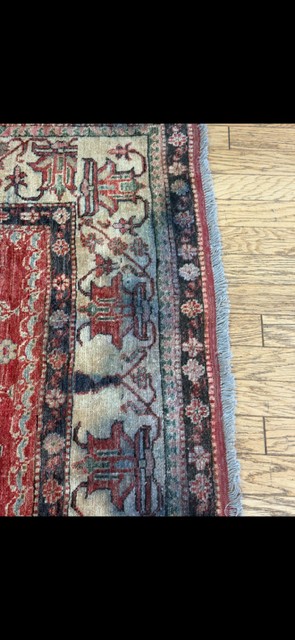
August 08, 2026 | Rhinebeck, NY
Rug Cleaning & Repair
Professional Oriental & Persian Rug Cleaning and Repair
Your Oriental or Persian rug is more than a floor covering—it is a handcrafted work of art that deserves specialized care. At Jafri Rugs, we provide professional Oriental rug cleaning, Persian rug cleaning, rug repair, and restoration services designed to preserve the beauty, condition, and longevity of your valuable handmade rugs.
From routine cleaning and stain removal to intricate reweaving and fringe restoration, our experienced rug specialists use proven techniques and specialized equipment to care for rugs of all ages, materials, and construction.
Expert Persian & Oriental Rug Cleaning
Regular professional cleaning helps remove deeply embedded dirt, dust, allergens, stains, and odors that ordinary vacuuming cannot eliminate. Our Persian and Oriental rug cleaning process is tailored to each rug based on its fiber, construction, dyes, age, and condition.
Our rug cleaning services include:
- Persian rug cleaning
- Oriental rug cleaning
- Wool rug cleaning
- Silk rug cleaning
- Antique rug cleaning
- Handmade rug cleaning
- Area rug cleaning
- Pet stain and odor removal
- Flood damage cleaning
- Moth damage treatment
- Spot and stain removal
We carefully clean your rug while taking precautions to protect delicate fibers, natural dyes, and intricate designs.
Professional Rug Repair & Restoration
Over time, handmade rugs can experience wear, tears, holes, unraveling, moth damage, and other structural problems. Our Oriental rug repair and restoration services help stabilize damaged rugs and restore their appearance.
Our restoration services include:
- Rug reweaving
- Persian rug repair
- Oriental rug repair
- Fringe repair and replacement
- Edge and binding repair
- Foundation repair
- Hole and tear repair
- Moth damage repair
- Hooked rug re-hooking
- Color restoration
- Antique rug restoration
Our skilled craftsmen carefully match fibers, colors, patterns, and weaving techniques to create repairs that blend naturally with the original rug.
Persian Rug Reweaving
Reweaving is one of the most specialized forms of rug restoration. When a Persian or Oriental rug has holes, tears, or missing sections, damaged areas can be reconstructed using traditional techniques.
Our specialists can recreate the rug's foundation, knots, pile, and decorative patterns to restore structural integrity while maintaining the character of the original piece.
Fringe & Edge Repair
Fringe is an important part of a handmade rug's foundation and appearance. Worn or damaged fringe can lead to additional unraveling if left untreated.
Our rug fringe repair and replacement services address loose, damaged, or missing fringe while helping stabilize the ends of the rug. We also provide professional edge binding and side repair when needed.
Flood Damage Rug Cleaning & Restoration
Water damage can cause serious problems for Persian and Oriental rugs, including staining, dye migration, odors, mold, mildew, and structural deterioration.
If your rug has been affected by a flood, burst pipe, plumbing leak, or other water event, prompt professional treatment is essential. Our flood damage rug cleaning and restoration services are designed to remove contaminants, extract moisture, thoroughly clean the rug, and assess any necessary repairs.
Moth Damage Rug Repair
Moths can cause extensive damage to wool and other natural-fiber rugs. Small areas of missing pile can eventually develop into larger holes and structural problems.
Our specialists can identify moth damage and perform the necessary moth-damaged rug repair, reweaving, and foundation restoration to help preserve your rug.
Why Choose Jafri Rugs?
Choosing the right rug cleaner and repair specialist is essential when caring for a valuable handmade rug. At Jafri Rugs, we understand the unique requirements of Persian, Oriental, antique, wool, and silk rugs.
Our approach combines:
- Experienced rug specialists
- Traditional restoration techniques
- Specialized rug cleaning equipment
- Careful inspection of every rug
- Customized cleaning and repair methods
- Attention to delicate fibers and dyes
- Comprehensive cleaning and restoration services
Whether your rug needs routine cleaning, stain removal, fringe repair, or extensive reweaving, we provide professional care tailored to its individual needs.
Protect Your Rug Investment
Regular professional cleaning and timely repairs can help extend the life of your Oriental or Persian rug. Addressing minor damage early can prevent it from becoming a much larger and more expensive restoration project.
Whether you own a family heirloom, antique Persian rug, handmade Oriental rug, or contemporary area rug, professional care can help preserve its beauty and structural integrity for years to come.
Schedule Oriental Rug Cleaning or Repair
Don't trust your valuable handmade rug to a standard carpet cleaning service. Choose experienced professionals who understand the construction, fibers, dyes, and craftsmanship of Oriental and Persian rugs.
Contact Jafri Rugs today to schedule a professional rug cleaning, repair, or restoration evaluation. From routine cleaning to complex reweaving, we're here to help preserve your rug for generations.
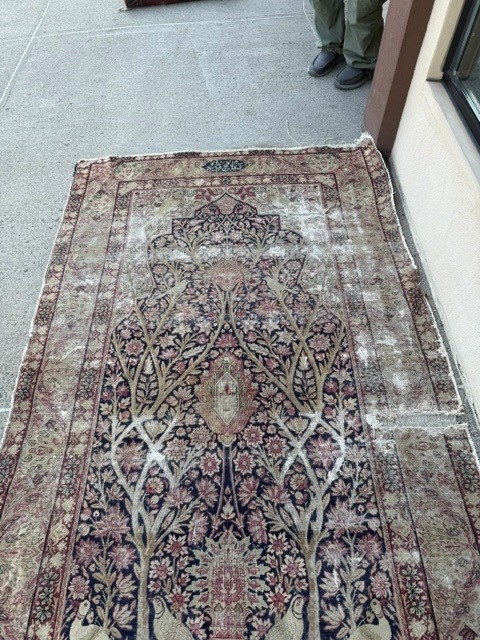
July 27, 2026 | Rhinebeck, NY
For this rug Jafri Rugs will do the following:
The Jafri Oriental Rugs Cleaning, Fringe implant and binding process is a meticulous restoration technique used to repair handmade Persian, Oriental, antique, wool, and silk rugs that have suffered damage from wear, holes, tears, moths, or fire. The goal is to restore the rug while preserving its original design, structure, and value.
1. Comprehensive Inspection
Every rug begins with a detailed assessment where technicians examine:
- Hole and tear locations
- Missing pile or knots
- Loose or unraveling edges
- Fiber type (wool, silk, or cotton)
- Knot style and density
- Dye colors and overall condition
This inspection determines the best restoration method while protecting the rug's authenticity.
2. Professional Cleaning
Before reweaving begins, the rug is thoroughly hand washed to remove dirt, dust, and oils that can interfere with repairs. Cleaning also reveals hidden damage that may require restoration.
3. Foundation Reconstruction
If the rug's foundation has been damaged:
- Broken warp threads are replaced.
- Missing weft threads are reconstructed.
- The rug's structural integrity is restored before any decorative work begins.
This step provides the framework needed for long-lasting repairs.
4. Hand Reweaving
Experienced artisans carefully recreate the damaged area by:
- Matching the original knot type (Persian or Turkish)
- Matching knot density
- Using wool or silk that closely matches the original fibers
- Reproducing intricate borders, floral motifs, medallions, and other patterns knot by knot
The objective is to make the repair blend as seamlessly as possible with the surrounding design.
5. Color Matching and Restoration
When necessary, restoration specialists:
- Match original vegetable or chrome dye colors
- Hand-dye replacement fibers when required
- Blend repaired areas with the existing rug to maintain a consistent appearance
Color restoration is performed carefully to preserve the rug's original character while minimizing visible repairs.
6. Fringe and Edge Restoration
If damage extends to the rug's ends:
- Missing or worn fringe is repaired or replaced.
- Side bindings are reinforced or rebuilt.
- Rug edges are secured to prevent future unraveling.
These repairs improve both the rug's appearance and its structural stability.
7. Shearing and Grooming
Once reweaving is complete:
- The repaired pile is trimmed to match the surrounding height.
- Fibers are brushed in the natural pile direction.
- The repaired area is blended for a consistent texture and finish.
8. Final Inspection
Before returning the rug, technicians verify:
- Accurate pattern reproduction
- Secure knots and foundation
- Proper color matching
- Smooth, even pile height
- Overall craftsmanship and structural integrity
The finished rug is carefully inspected to ensure the restoration meets professional quality standards.
Reweaving is one of the most specialized forms of rug restoration. By rebuilding damaged areas knot by knot using matching materials and traditional weaving techniques, Jafri Oriental Rugs aims to preserve the beauty, durability, and value of handmade Persian and Oriental rugs while extending their usable life.
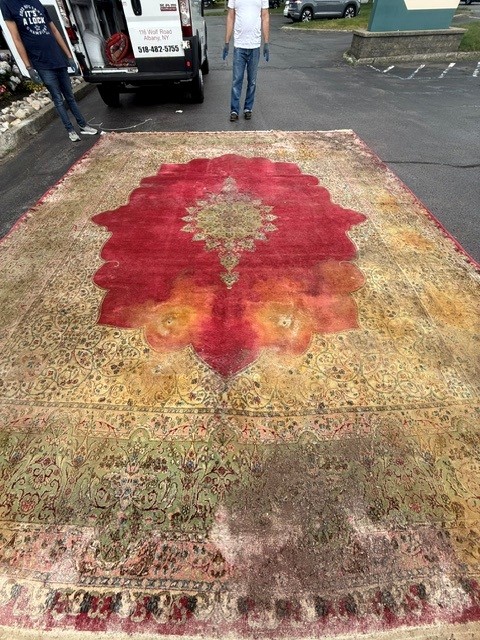
July 07, 2026 | Rhinebeck, NY
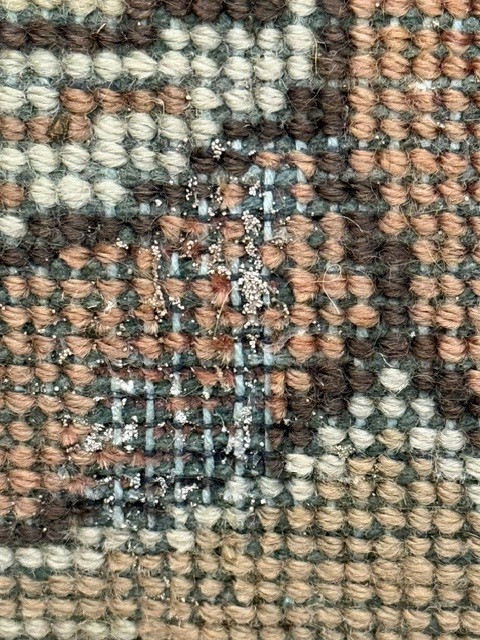
Jafri Rug Cleaning and Repair services is designed to safely clean handmade, antique, wool, silk, and other specialty rugs. The typical process includes:
- Inspection (Pre-Treatment) – Each rug is carefully inspected to determine its condition, fiber type, dyes, and any stains or damage. This helps identify the most appropriate cleaning method.
- Dust Removal – Specialized dusting equipment removes deeply embedded dust, grit, and allergens from the rug before washing. This is a critical step because dry soil can damage fibers if left in the rug during washing.
- Soaking – The rug is soaked to loosen dirt, pet stains, odors, and other contaminants. Heavily soiled rugs may require multiple soaks. Antique and silk rugs receive extra care.
- Hand Washing – Both sides of the rug are washed using vegetable-based soaps and specialized shampoos, followed by a thorough rinse to remove all cleaning residues.
- Luster Wash (when appropriate) – Some rugs receive an additional luster treatment to enhance brightness and restore appearance.
- Brushing/Grooming – The pile is brushed with grooming tools to align the fibers and restore the rug's natural texture.
- Controlled Drying – Rugs are dried naturally in a climate-controlled drying room to help prevent shrinkage, mildew, or fiber damage.
- Final Inspection – Each rug undergoes a final quality inspection. If necessary, cleaning steps are repeated to achieve the best possible result before the rug is returned to the customer.
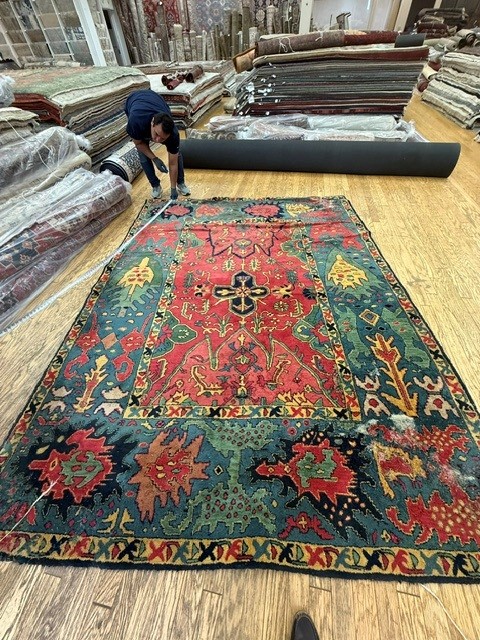
July 02, 2026 | Rhinebeck, NY
Jafri Rugs will do the following:
1. Inspection and Documentation
Jafri Rug examines:
- Tears, holes, and worn areas
- Loose or missing weft and warp threads
- Fringe damage
- Color fading or dye lot issues
- Structural weakness
2. Removing binding and fringe Prior to Cleaning
The rug is typically cleaned before field work restoration, but in the case of binding and fringe work both are removed prior to cleaning
- Dirt and grit are removed.
- Stains and contaminants are treated.
- Cleaning exposes all existing damage and shows any damage that the customer may not have known existed prior to cleaning
3. Stabilization
Weak or unraveling sections are secured to prevent further deterioration.
- Loose threads are anchored.
- Edges may be temporarily supported.
4. Warp Repair
The warp threads (the rug's structural foundation) are repaired if broken.
- Missing warps are recreated.
- New foundation threads are inserted and tensioned to match the original weave.
5. Weft Reconstruction
The weft threads that create the design are rewoven.
- Matching wool, cotton, or other fibers are selected.
- Colors are matched as closely as possible.
- Traditional weaving techniques are used to recreate patterns.
6. Hole and Tear Reweaving
For holes and tears:
- Damaged fibers are removed.
- The area is rewoven thread by thread.
- Patterns are reconstructed to blend with surrounding sections.
7. Edge and Selvage Repair
The side edges (selvages) are reinforced.
- Frayed edges are rewoven or wrapped.
- New edge bindings may be added if necessary.
8. Fringe Restoration
If the fringe is damaged:
- Existing fringe is secured.
- Missing fringe may be reconstructed.
- The repair is designed to match the original style.
9. Blocking and Reshaping
Many older Kilims become distorted over time.
- The rug is carefully stretched and aligned.
- Dimensions are corrected where possible.
- The rug is dried under controlled tension.
10. Final Finishing
The repaired area is inspected for:
- Structural integrity
- Pattern accuracy
- Color consistency
- Overall appearance
Common Rug Repairs
- Small tears and splits
- Hole reweaving
- Fringe replacement
- Edge reinforcement
- Moth damage restoration
- Pet damage repair
- Full panel reconstruction
Important Consideration
For collectible or antique Persian rugs such as this, Jafri Rugs often aims for stabilization and preservation and the artistry is that the rug should not look like there was any repair work done to the rug and the antiquity of the rug was maintained. This approach helps maintain the rug's historical integrity and value.
Typical repair costs vary widely depending on the amount of hand reweaving required. A small tear may take a few hours, while a large patterned hole can require many days of artisan weaving work.
June 26, 2026 | Rhinebeck, NY
Jafri Rug restoration will do the following:
Cleaning:
Gentle Cleaning is essential for preserving the fibers and colors. Using harsh chemicals or cleaning methods can cause the colors to fade or damage the wool. Professional dry cleaning or washing with mild soaps and water is recommended.
Vacuuming with a low-suction vacuum is often used to remove dirt and dust without disturbing the delicate fibers.
Repairing Damaged Areas:
Reweaving is required for areas with wear, holes, or fraying. Skilled artisans will carefully match the original design and weave to restore damaged sections without altering the original look.
Edge Repairs: The edges need reinforcement to prevent fraying and maintain their structure.
Padding should be cut to protect the warp and weft
June 19, 2026 | Rhinebeck, NY
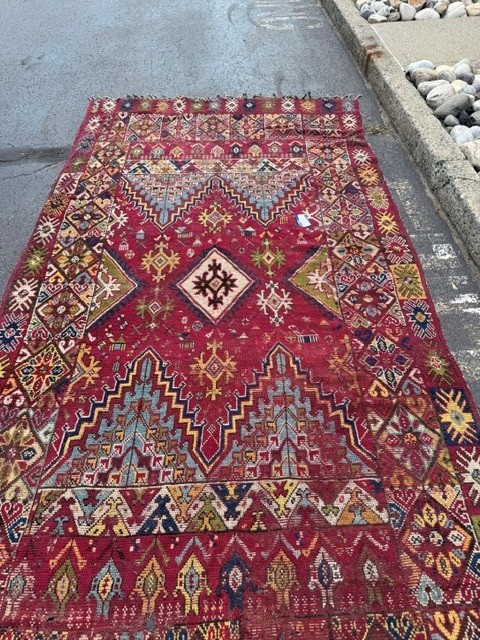
Restoring a woven kilim rug is a delicate process that requires understanding the rug’s structure, materials, and traditional weaving techniques. Kilims are flat-weave rugs, typically made from wool (and sometimes cotton), and have no pile. Restoration focuses on preserving the rug's authenticity while repairing damage such as holes, frayed edges, or faded colors.
Repairing a woven kilim rug depends on the type and extent of damage, Jafri Rug weavers follow the below steps:
1. Inspection
Examine the rug for:
- Holes or worn areas
- Broken warp threads (the lengthwise foundation threads)
- Missing weft threads (the widthwise woven threads)
- Frayed edges or ends
- Color fading or fiber deterioration
2. Rug Cleaning and Dusting
- Soak rug in tub of cold water and solution
- Remove dirt trapped in damaged sections.
- If heavily soiled, wash the rug appropriately and allow it to dry completely before repairs.
3. Stabilize the Rug
Secure the rug on a flat work surface or stretching frame.
- Align distorted areas.
- Straighten loose warp threads.
- Prevent additional unraveling while working.
4. Repair the Foundation and Warp and Weft
If warp threads are broken:
- Insert replacement warp yarns that closely match the original material (wool, cotton, or goat hair).
- Anchor the new warps into sound surrounding structure.
- Maintain the original spacing and tension.
This is often the most critical step because the entire weave depends on the warp foundation.
5. Reweave Missing Areas
For holes:
- Match the original yarn type, thickness, and color as closely as possible.
- Recreate the missing weft structure.
- Follow the original pattern row by row.
- Weave tightly enough to match surrounding density without causing puckering.
For valuable or antique kilims, restorers often hand-dye yarns to achieve accurate color matching.
6. Repair Binding
If side edges are frayed:
- Rebuild the binding (finished edge).
- Wrap and reinforce edge cords.
- Stitch loose sections securely.
Strong edges help prevent future unraveling.
7. Repair Fringes
If the rug ends are damaged:
- Secure loose wefts.
- Recreate original end bindings.
- Replace or reconstruct fringe if appropriate to the rug's design.
Sometimes conservation work leaves fringe incomplete intentionally to preserve authenticity.
8. Blend and Finish
After structural repairs:
- Shear any excess yarn.
- Adjust tension where necessary.
- Lightly groom fibers to blend repaired sections with the original weaving
June 04, 2026 | Rhinebeck, NY
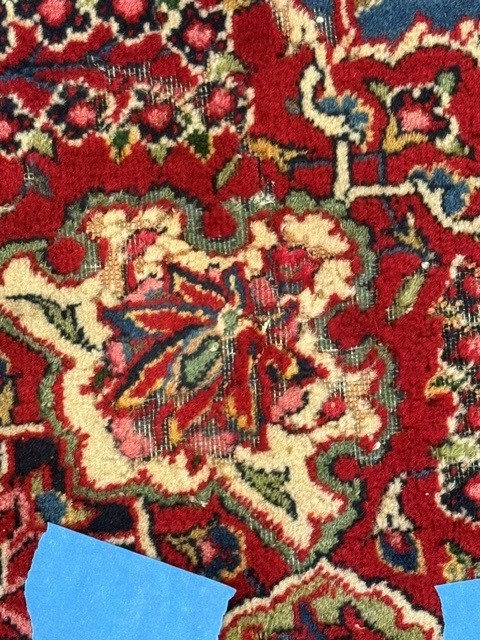
The rug was fully repaired by Jafri Rugs and the second picture shows the post restoration work.
A Persian Kashan of this quality is a once in a lifetime rug that is no longer produced on any loom across the world.
The rug was made in the 1920s and has all the characteristics of an antique Persian rug
The rug is a non programmed size and is made with vegetable dyes
Additionally, it is threadbare and is tightly knotted
HOWEVER, the rug has the following issues:
-Moth damage in the field that ate thru the motifs which requires reweaving and color restoration
-Fringe destroyed which requires fringe implant
-Faded vegetable dyes which requires brushing the rug with oil and vegetable dye to bring back the original color of the rug
Jafri Rug restoration fixed this rug entirely and raised the value of the rug by doing the following:
1.Inspection and Identification: Jafri Rugs carefully inspected to assess the extent of the moth damage. This involves checking the front and back of the rug for signs of infestation.
· Moth Treatment: The rug would be treated to eliminate any remaining moths and eggs. This usually involves a deep fumigation process using eco-friendly chemicals or freezing the rug to kill any pests.
· Re-weaving or Repairing Damaged Areas: The affected areas would likely require Jafri’s weavers reweaving the entire field. The damaged wool would be carefully removed, and new wool fibers, typically dyed to match the original, would be woven into the affected areas to restore the rug's appearance.
2. Worn and Faded Areas of the rug
As an example the medallion is a central feature in Persian rugs, and significant wear or fading can take away from the rug’s beauty and value.
· Color Restoration: To restore the faded vegetable and chrome dyes, Jafri’s first class weavers dyeing techniques may be employed. This could involve carefully re-dyeing the area using natural dyes or color-safe synthetic dyes. This process is done with precision to match the original hues and avoid dye bleeding.
· Reweaving/Restoration: If the medallion’s pattern is worn down to the point of damage, Jafri’s weavers had to reweave the intricate design. This involves painstakingly replicating the original design and colors.
3. Fringe and Binding Unraveling
The fringe and the binding are crucial for maintaining the structural integrity and aesthetic of the rug.
· Fringe Repair or Replacement: The unraveling fringe would need to be reattached or replaced, depending on the extent of the damage. Jafri’s weavers often restore the fringe by knotting it back into place using similar fibers (wool or silk, depending on the rug’s original material). If the fringe is too damaged, it might need to be completely replaced.
· Binding Reinforcement: The edges and binding would also be repaired. This could involve stitching new binding material (usually wool or cotton) onto the rug’s edges, followed by a careful reinforcement of the stitching to prevent further unraveling. A careful color match is essential to keep the aesthetic intact.
4. Wool Pilling
Pilling happens when fibers get tangled and form small balls of fuzz, which can occur naturally over time with wool rugs.
· Shaving the Rug: Pilling can be removed through a careful process of shaving. Special tools or razors designed for rugs are used to gently remove the pill without damaging the fibers underneath. The professional would carefully go over the rug to ensure the pilling is removed evenly, leaving the wool in good condition.
· Deep Cleaning: After shaving off the pilling, the rug would undergo a deep cleaning to remove any remaining loose fibers and dirt. This would also help restore the softness of the wool.
Additional Steps in the Restoration Process:
· Deep Cleaning: Once the repairs are done, the rug would be carefully cleaned using appropriate techniques for Persian rugs. This would likely involve hand-washing the rug with a gentle, wool-safe detergent to remove dirt, oils, and any debris, followed by rinsing and drying.
· Final Inspection: After repairs, the rug would undergo a final inspection to ensure that all issues (moth damage, wear, pilling, etc.) have been properly addressed. Any minor touch-ups or final adjustments would be made.
April 18, 2026 | Rhinebeck, NY
Jafri Rug restoration fixed this rug entirely and raised the value of the rug by doing the following:
1.Inspection and Identification: Jafri Rugs carefully inspected to assess the extent of the moth damage. This involves checking the front and back of the rug for signs of infestation.
· Moth Treatment: The rug would be treated to eliminate any remaining moths and eggs. This usually involves a deep fumigation process using eco-friendly chemicals or freezing the rug to kill any pests.
· Re-weaving or Repairing Damaged Areas: The affected areas would likely require Jafri’s weavers reweaving the entire field. The damaged wool would be carefully removed, and new wool fibers, typically dyed to match the original, would be woven into the affected areas to restore the rug's appearance.
2. Worn and Faded Areas of the rug
As an example the medallion is a central feature in Persian rugs, and significant wear or fading can take away from the rug’s beauty and value.
· Color Restoration: To restore the faded vegetable and chrome dyes, Jafri’s first class weavers dyeing techniques may be employed. This could involve carefully re-dyeing the area using natural dyes or color-safe synthetic dyes. This process is done with precision to match the original hues and avoid dye bleeding.
· Reweaving/Restoration: If the medallion’s pattern is worn down to the point of damage, Jafri’s weavers had to reweave the intricate design. This involves painstakingly replicating the original design and colors.
3. Fringe and Binding Unraveling
The fringe and the binding are crucial for maintaining the structural integrity and aesthetic of the rug.
· Fringe Repair or Replacement: The unraveling fringe would need to be reattached or replaced, depending on the extent of the damage. Jafri’s weavers often restore the fringe by knotting it back into place using similar fibers (wool or silk, depending on the rug’s original material). If the fringe is too damaged, it might need to be completely replaced.
· Binding Reinforcement: The edges and binding would also be repaired. This could involve stitching new binding material (usually wool or cotton) onto the rug’s edges, followed by a careful reinforcement of the stitching to prevent further unraveling. A careful color match is essential to keep the aesthetic intact.
4. Wool Pilling
Pilling happens when fibers get tangled and form small balls of fuzz, which can occur naturally over time with wool rugs.
· Shaving the Rug: Pilling can be removed through a careful process of shaving. Special tools or razors designed for rugs are used to gently remove the pill without damaging the fibers underneath. The professional would carefully go over the rug to ensure the pilling is removed evenly, leaving the wool in good condition.
· Deep Cleaning: After shaving off the pilling, the rug would undergo a deep cleaning to remove any remaining loose fibers and dirt. This would also help restore the softness of the wool.
Before and After Job Photos Rhinebeck
See All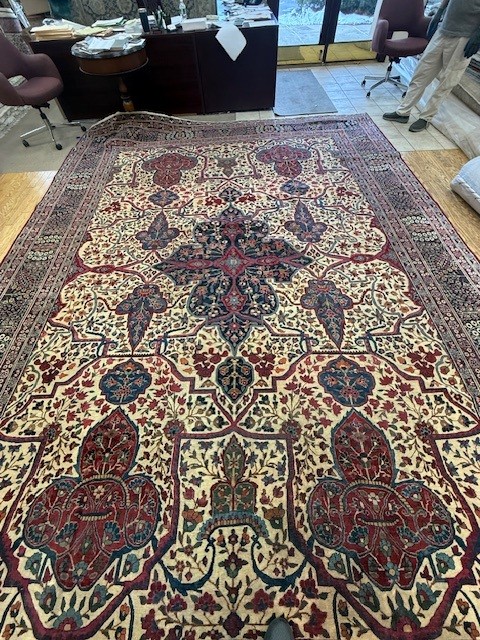
December 10, 2025 | Rhinebeck, NY
This Yazd Kerman is an antique turn of the century Persian masterpiece rug. Jafri Oriental Rugs has serviced Dutchess County for over 45 years and is an authority on not only the history of the rug but the most proper way to repair it. The rug is incredibly valuable and is a palace size rug measuing 11'.6"x16'.2". The was produced in the town of Yazd, near Kerman, Iran. The first image shows the rug completely worn requiring the following work:
-Warp and weft coming thru the rug, and various holes throughout the field requiring reweaving and color restoration work where Jafri Rug restoration weavers match the wool dyes lots and reweave into the floral motifs of the rug.
-Fringe completely fraying requiring fringe implant, circa 1900 tea stained fringe
-Edging completely unraveling into the field
-Moth damage of the rug
Jafri Oriental Rugs has serviced Dutchess County for over 45 years
The second image shows the rug completely restored
Jafri Rug Restoration fixed this rug by applying its professionalmuseum-quality antique rug cleaning processstep-by-step:
1. Inspection & Documentation
A specialist first examines the rug to determine:
- Age, origin, weave style
- Fiber type (wool, silk, cotton foundation, etc.)
- Dye stability (natural vegetable dyes vs synthetic dyes)
- Fragile areas: worn patches, dry rot, loose fringe, holes, moth damage
- Previous repairs or color touch-ups
Why it matters:Antique rugs often have unstable dyes and delicate foundations. The cleaning process is tailored based on the following factors: fabric, type of dye used, age of rug
2. Dry Soil Removal (Dusting)
This is one of themost important steps.
- Gentle vibrating dusting machines
- Air dusting / compressed air
This removes the following:
- Packed dust
- Sand/grit
- Allergens
- Moth larvae and eggs
Why it matters:Up to 70% of soil in antique rugs is dry particulate thattears fibersif washed without dusting.
3. Colorfastness Testing
Before any washing:
- Each dye color (reds, blues, greens, blacks) is tested with water and mild detergent.
- If dyes are unstable, cleaners applydye stabilizersor choose adry-cleaning or low-moisture method.
Why it matters:Natural dyes can bleed or fade; this prevents damage.
4. Specialty Hand Wash (Traditional Bath)
Most high-end cleaners wash antique rugsby hand, never by machine.
Steps:
- Rug is submerged in a cool-water wash pit.
- Olive oil wool-safe shampoo from Italy is gently applied, no harsh chemicals are applied as that can cause color run/color bleeding
- Both sides of the rug are cleaned using soft brushes or hand tools.
- Water is circulated to remove embedded dirt.
5. Rinse & Water Extraction
- Thorough rinsing removes soap residue that can attract dirt later.
- Water extraction is done by rolling, squeegeeing, or suction tools.
- No high-heat drying (which can shrink wool or warp foundations).
6. Controlled Drying
Antique rugs are dried:
- In climate-controlled rooms with proper airflow
Drying can take 24–48+ hours depending on the rug's age and thickness.
7. Grooming & Fringe Care
After cleaning:
- Rug pile is brushed in its natural direction going the grain and fibers of the rug
- Fringe is hand-cleaned and straightened out with a comb
8. Repairs or Restoration
- Reweaving worn areas
- Edge/selvage reinforcement
- Fringe repair or replacement
- Moth damage treatment
- Color restoration is used where actual dye and New Zealand worsted wool is used to bring back the original condition of the rug
9. Final Inspection
The rug is checked for:
- Even pile direction
- Clean fringe
- No soap residue
- No odor
- Proper color stability
- Smooth, flat drying
Why Antique Rugs Need Special Care?
Antique rugs are different because:
- Natural vegetable dyes can bleed
- Wool fibers become brittle with age
- Cotton foundations shrink easily
- Hand-knotted structure can loosen
- Value (sometimes thousands of dollars) depends on condition
Machine carpet cleaning or steam cleaning candestroy antique rugs.
June 14, 2025 | Rhinebeck, NY
The before and after images show the work required to fix this rug. The rug is a classic sumac and therefore requires craftsmanship to bring this heirloom rug back to its original condition. Jafri Rugs did the following:
-Recreated the original schematic of the rug to reweave the destroyed medallions
1.Inspection and Identification: Jafri Rugs carefully inspected to assess the extent of the moth damage. This involves checking the front and back of the rug for signs of infestation.
• Moth Treatment: The rug would be treated to eliminate any remaining moths and eggs. This usually involves a deep fumigation process using eco-friendly chemicals or freezing the rug to kill any pests.
• Re-weaving or Repairing Damaged Areas: The affected areas would likely require Jafri’s weavers reweaving the entire field. The damaged wool would be carefully removed, and new wool fibers, typically dyed to match the original, would be woven into the affected areas to restore the rug's appearance.
2. Worn and Faded Areas of the rug
As an example the medallion is a central feature in Persian rugs, and significant wear or fading can take away from the rug’s beauty and value.
• Color Restoration: To restore the faded vegetable and chrome dyes, Jafri’s first class weavers dyeing techniques may be employed. This could involve carefully re-dyeing the area using natural dyes or color-safe synthetic dyes. This process is done with precision to match the original hues and avoid dye bleeding.
• Reweaving/Restoration: If the medallion’s pattern is worn down to the point of damage, Jafri’s weavers had to reweave the intricate design. This involves painstakingly replicating the original design and colors.
3. Fringe and Binding Unraveling
The fringe and the binding are crucial for maintaining the structural integrity and aesthetic of the rug.
• Fringe Repair or Replacement: The unraveling fringe would need to be reattached or replaced, depending on the extent of the damage. Jafri’s weavers often restore the fringe by knotting it back into place using similar fibers (wool or silk, depending on the rug’s original material). If the fringe is too damaged, it might need to be completely replaced.
• Binding Reinforcement: The edges and binding would also be repaired. This could involve stitching new binding material (usually wool or cotton) onto the rug’s edges, followed by a careful reinforcement of the stitching to prevent further unraveling. A careful color match is essential to keep the aesthetic intact.
4. Wool Pilling
Pilling happens when fibers get tangled and form small balls of fuzz, which can occur naturally over time with wool rugs.
• Shaving the Rug: Pilling can be removed through a careful process of shaving. Special tools or razors designed for rugs are used to gently remove the pill without damaging the fibers underneath. The professional would carefully go over the rug to ensure the pilling is removed evenly, leaving the wool in good condition.
• Deep Cleaning: After shaving off the pilling, the rug would undergo a deep cleaning to remove any remaining loose fibers and dirt. This would also help restore the softness of the wool.
September 01, 2025 | Kingston, NY
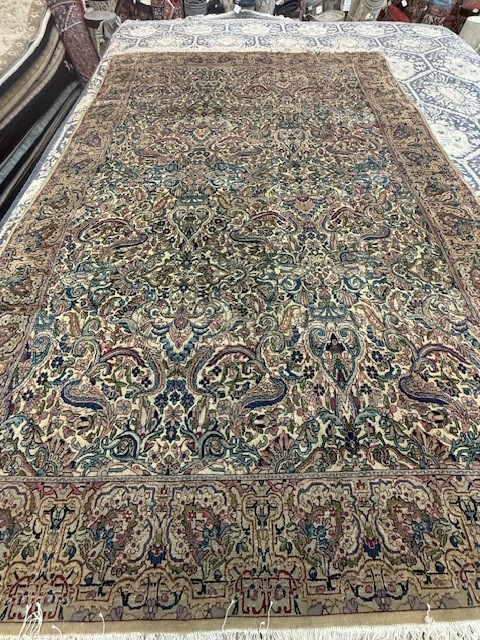
This is an example of a Lavar Kerman timeless masterpiece rug made in Iran. This rug is no longer able to be produced on the loom. It is over a century old. A rug of this quality comes from the finest weavers of Iran from the town of Lavar but the rug had enormous wear and was destroyed in numerous areas. This type of work can only be performed by hand and Jafri Rug's weavers are skilled artisans who understand the curvilinear characteristics of the rug and can reweave into the wool without making the rug look new. The time to restore this rug took approx 6 months.
Picture 1 shows the pre-restoration work where the rug was showing as worn and the fringe and binding was unraveling and the color was faded.
Picture 2 shows the post-restoration work where the rug was completely rewoven and color restoration was treated on the rug.
Jafri Rug restoration repaired this rug by doing the following:
Pre-Repair Cleaning
- Adeep cleaningis performed before repairs to remove dirt, oils, and debris that interfere with repair work.
- Includes:
- Dusting (front and back)
- Gentle hand washing with pH-neutral detergents
- Rinsing and drying in a temperature-controlled environment
Structural Repairs
These are the most critical to maintain rug integrity:
a. Edge Repair (Overcasting or Binding)
- Rewrap or rebind fraying edges to prevent unraveling.
- Uses matching wool or cotton thread.
- Restores tension and keeps the weft and warp from separating.
b. Fringe Repair or Replacement
- Stabilizes or reconstructs the fringe (often the warp threads).
- May involve:
- Tying off loose fringe
- Sewing in new fringe sections
- Weaving new fringes into the foundation
c. Hole or Tear Repair
- Small holes: patched and reinforced from the back.
- Larger holes or tears: require reweaving the foundation (warp and weft), then tying new knots to match the original pattern.
4. Pile Reweaving / Pattern Reconstruction
- Rebuilds worn or missing areas by hand-knotting new wool or silk into the structure.
- Requires:
- Color-matching wool (often hand-dyed)
- Matching theknot density, knot type (Turkish or Persian), and pattern
- Done by experienced weavers to ensure seamless blending with the original design.
5. Color Restoration
- In areas where colors have faded or bled, restorers may:
- Touch up color with textile-safe dyes where there is already wool shown in the pile but requires blending of color for consistency in the rug's colors
- Avoid painting, which can damage fibers over time
6. Shearing & Grooming
- After repairs, the pile is carefully sheared to match surrounding areas.
- Helps ensure a consistentpile heightand finish.
- Brushing aligns the nap and improves visual consistency.
7. Blocking & Reshaping
- If the rug is warped or misshapen:
- It's dampened and laid flat under weight or pinned.
- Dried under tension to restore its original shape and prevent buckling.
8. Final Cleaning & Inspection
- A final surface clean removes any dust or fibers from the repair.
- Inspection ensures:
- Seamless repairs
- Color and texture matches
- Edges are secure and the rug lies flat
Reviews From Our Customers
I bless the day I found Mr Jafri. As one who has collected rugs for 50 years, I both learned about their value and origins and had them beautifully cleaned and repaired.
Very beautiful rugs there, would have been a difficult decision. Only needed a rug pad this time. When we're in the market again, this is where we'll go. Pete, Delmar, NY
Call Us For Your Free Pickup & Delivery Today!
